






Publicado el 27 Noviembre 2023
Public Ministry of Guatemala (MP) leads ‘Operation Black Wolf’
Chronology
The Interinstitutional Center against Narcotics in Guatemala, known by its acronym -CICNAG-, in which the three major institutions (The Public Ministry of Guatemala, through the Narcotics Crimes Prosecutor’s Office, Ministry of the Interior through the Anti-Narcotics Analysis and Information Sub-directorate and others, Ministry of National Defense through the Guatemalan Army) are involved in the investigation, interdiction, and judicialization of threats against the national sovereignty of Guatemala related to drug trafficking and related crimes. This is done in coordination with the United States’ National Security Investigations Office, known by its acronym in English -ICE/HSI-. They carry out the operation named «BLACK WOLF,» whose main mission is to investigate, destabilize, and dismantle international organizations and other criminal networks that threaten or seek to violate the laws of both Guatemala and the United States.
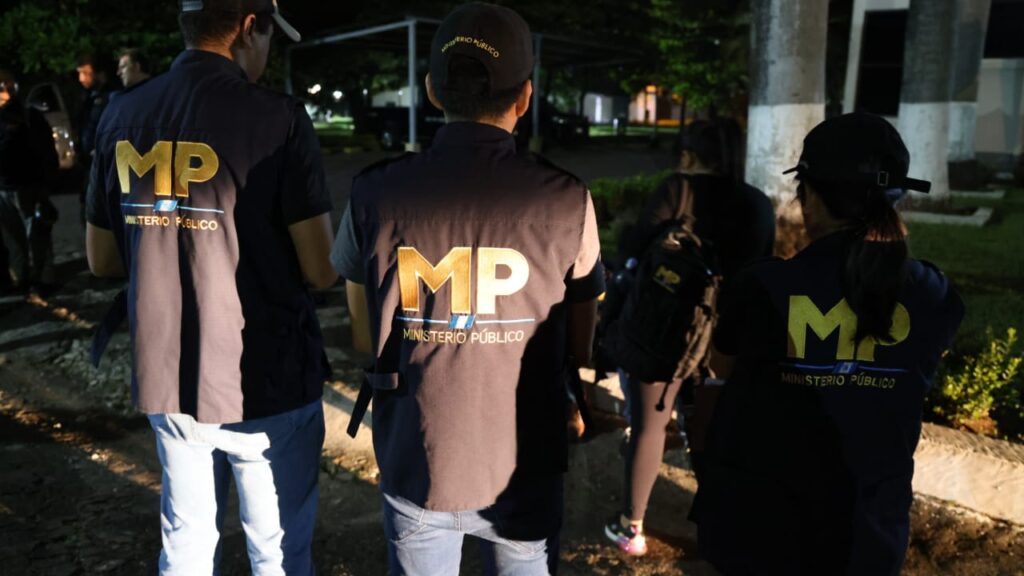
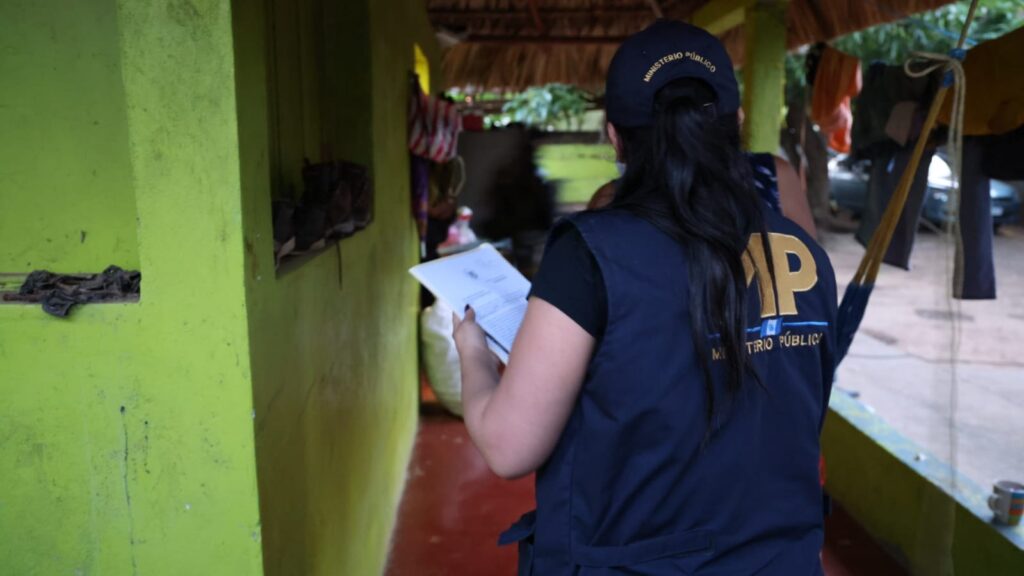
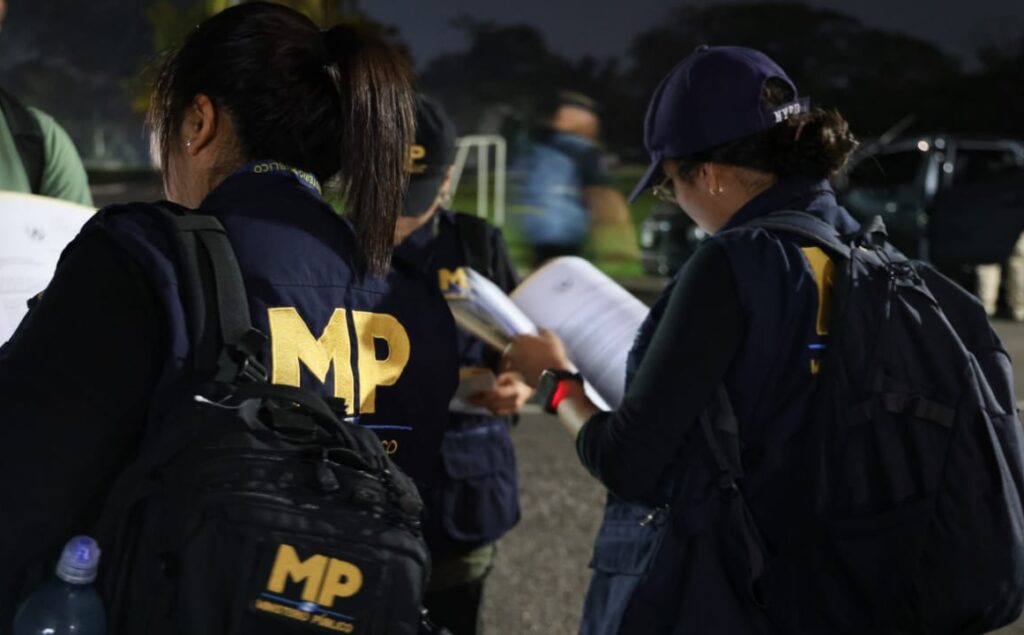
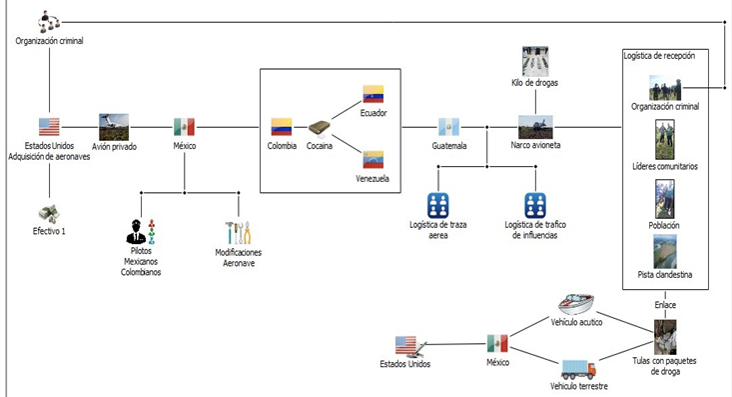
The CICNAG and HSI, deeply concerned about the threats of international drug and money trafficking, as well as the violation of the sovereignties of the involved countries, detected a complex criminal structure operating in Guatemala, Mexico, and the United States. This organization engages in the anomalous acquisition of aircraft, modifying them to meet the demands of the criminal structure and using them for drug transportation through air routes in both the Atlantic and Pacific, from South America to Guatemala, Mexico, Honduras, or Belize. In Guatemala, criminal structures exploit the material conditions and limited financial resources of populations in key geostrategic points for drug They take control of areas, associate with community leaders, elements of the National Civil Police, and the Guatemalan Army to ensure impunity and facilitate drug trafficking to Mexico and subsequently to the United States. This is done without eliciting a reaction from law enforcement agents, facilitating the landing of aircraft on clandestine airstrips prepared by members of the criminal structure and collaborating population. These illegal airstrips are temporarily established at strategic points. Consequently, a criminological analysis was conducted, and a strategic investigation was initiated to dismantle the different criminal cells involved in the international criminal phenomenon.
SITUATIONAL ANALYSIS OF THE CRIMINAL PHENOMENON AND AREA OF INCIDENCE: Aerial drug trafficking is a current criminal phenomenon in the region, affecting mainly Colombia, Venezuela, Honduras, Guatemala, Belize, Mexico, and the United States. Criminal groups aim to use the primary air routes (Atlantic and Pacific) from north to south and south to north for: 1. Acquiring aircraft with N registration to avoid investigative scrutiny, as inspecting registrations in the United States may lead to international It’s worth noting that drug trafficking by aircraft allows the transportation of cargo ranging from 400 kilograms to 3000 kilograms of cocaine, with the transfer from South America to the landing point taking an estimated 9 to 3 hours, depending on the type of aircraft used. The aircraft can be propeller-driven or jet-type with turbines, which are abandoned once their mission is complete. The criminal group responsible for receiving the cargo in the strategic area has the primary function of unloading the plane and rendering it unusable, either by burning, burying, or sinking it, depending on the area of incidence. In Guatemala, there are three main cargo reception areas: the northern area (Peten), the northern transversal area (Quiché, Alta Verapaz, and Izabal), and the southern area (the entire Pacific coast from Escuintla to Retalhuleu).
In the third area, specifically beside the Guatemala-Mexico border, lies the fifth most important wetland reserve in Guatemala according to the Ramsar Convention. This reserve boasts dense flora and fauna, along with a complex riverside route of mangroves accessible only by watercraft. Surrounding the national reserve, populations such as Aldea el Chico, Aldea Entre Ríos, Nueva Cajolá, and others were founded. These serve as operational centers for criminal structures due to their optimal strategic positioning, being close to the Guatemala-Mexico border on the southern side and accessible via water routes along the riverside and the Pacific Ocean. The populations are duly organized through community development councils (COCODES), which, among their social functions, collaborate with criminal reception structures for: 1. Preparing the clandestine airstrip 2. Unloading the aircraft 3. Safeguarding the drugs 4. Subsequent transportation by sea or land towards the Guatemala-Mexico border. Additionally, some community members organize to block main entry routes to prevent the presence of law enforcement agents responsible for drug investigation and interdiction.
AIR TRAFFIC 1 (GUATEMALA): On December 7, 2019, information was obtained regarding the unauthorized entry of an aircraft into Guatemalan territory from South America. Upon initiating the search and tracking operation, the aircraft was located, and 751 packages of cocaine were seized in the municipality of Chisec, Alta Verapaz department. Additionally, various evidence was found, including a rifle-type firearm, some registered in the names of members of the criminal structure.
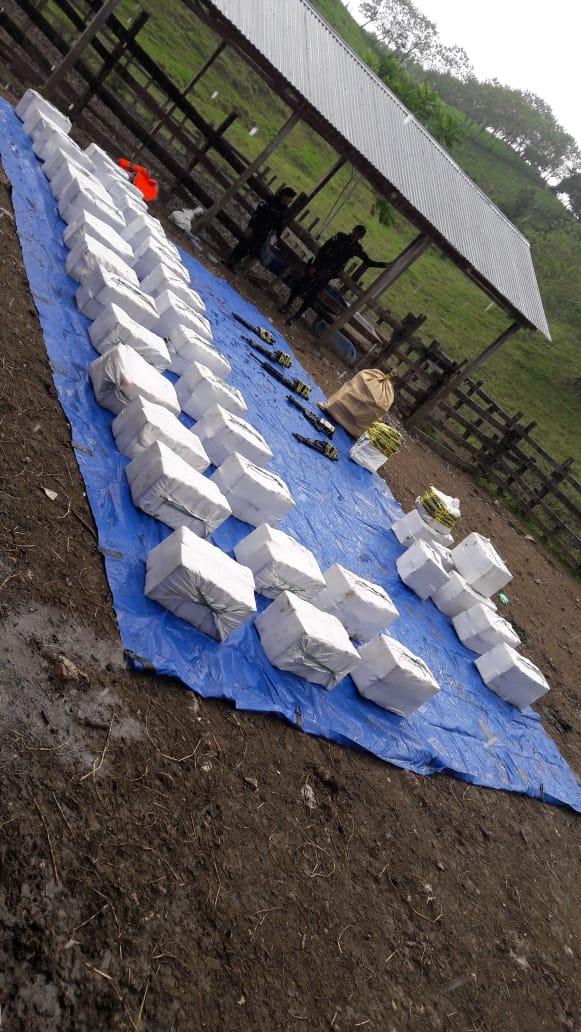
TRAFFIC 2 (GUATEMALA): On November 9, 2020, following the investigation, information was received regarding an alert about an illegal air trace. A jet-type aircraft entered Guatemalan territory without prior authorization and loaded with cocaine, landing on a clandestine airstrip located in El Chico village, Champerico, Retalhuleu. According to the criminal structure’s plan, the aircraft would land in the area, and with prior coordination with the COCODE leader, members of the population would provide support for surveillance, unloading, safeguarding, and transporting the drugs. This plan was thwarted by the coordinated efforts of the Narcotics Crimes Prosecutor’s Office of the Public Ministry of Guatemala, the Ministry of Defense, the Ministry of the Interior, and the United States Department of Homeland Security. When the population noticed the authorities’ presence, they proceeded to shoot and attempt to prevent the legal procedure. In the flagrant incident, 1,028 kilograms of cocaine were seized, along with the aircraft documentation with registration number XAVDP. The pilot, Joel Amaya Hoeflich, a Mexican national, and the co-pilot, Nicolas Santiago Cruz Arango, a Colombian national, were apprehended for the flagrant crime. VERDICT: On March 7, 2023, the Criminal Sentencing Tribunal for Narcotics and Environmental Crimes in the department of Retalhuleu issued a guilty verdict against Joel Amaya Hoeflich and Nicolas Santiago Cruz Arango as responsible perpetrators of the consummated crime of illicit trade, trafficking, and storage. The main sentence imposed was 15 years of non-commutable imprisonment and a fine of Q.150,000.00 (GTQ). For civil liability, they were condemned to pay Q.500,000.00 (GTQ). As an accessory penalty, expulsion from the country to their country of origin after serving the sentence or submitting to the jurisdiction of the United States.
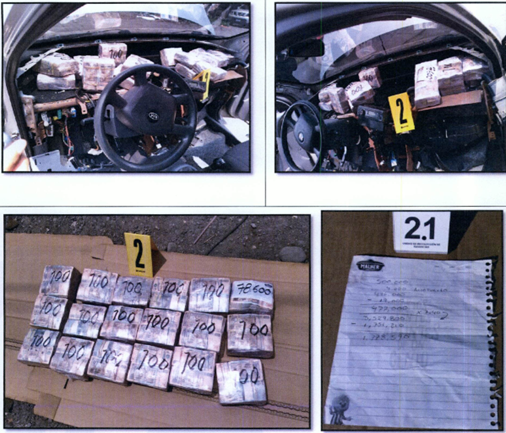
MONEY SEIZURE (GUATEMALA): On May 1, 2021, as part of the ongoing investigation, information was obtained that the criminal structure would coordinate the transfer of a large sum of money from the Alta Verapaz and Guatemala areas to the aircraft landing operation areas in Retalhuleu and Therefore, the Public Ministry of Guatemala, through the Narcotics Crimes Prosecutor’s Office, the Ministry of Defense, the Ministry of the Interior, and the United States Department of Homeland Security, coordinated an operation executed since April 30, 2021, with the aim of identifying and tracking vehicles containing hidden compartments (concealed compartments) within the dashboard. During the operation carried out at kilometer 113+800 on route CA2, at the entrance of the main street of the hamlet Nuevo Amanecer San Juan Bautista, Suchitepéquez department, Q.3,369,610.00 (GTQ) were seized. This followed information obtained in the Anti-Narcotics Analysis and Information Sub-directorate, in collaboration with the Narcotics Crimes Prosecutor’s Office.
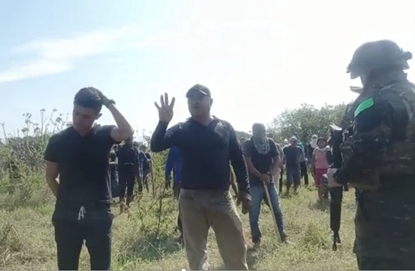
AIR TRAFFIC 3 (GUATEMALA): On November 5, 2021, as part of the ongoing investigation, information was received regarding an alert about an illegal air trace. An aircraft entered Guatemalan territory without legal authorization, loaded with the drug known as cocaine, and landed on a clandestine airstrip prepared by the residents of the Victorias 3 community, Champerico municipality, Retalhuleu department. Due to the coordination of the population obstructing the ground interdiction operation and facilitating the safeguarding of the illicit substance, law enforcement agents were only able to seize 105 packages of cocaine. During the seizure, members of the Guatemalan Army and the National Civil Police received threats from residents associated with the criminal structure, primarily from the coordinators of the cargo reception in the area, demanding the violent return of the confiscated drugs.
AIR TRAFFIC STATISTICS IN GUATEMALA 2019-2021: In Guatemala, from the year 2019 to 2021, criminal structures coordinated the reception of (49) aircraft at strategic points in the national territory. They used clandestine airstrips located in Alta Verapaz, Escuintla, Guatemala, Huehuetenango, Izabal, Peten, Quetzaltenango, Retalhuleu, San Marcos, Suchitepéquez, and Santa Rosa for this
| YEAR | DEPARTMENT | NUMBER OF LANDINGS |
| 2019 | ALTA VERAPAZ | 1 |
| ESCUINTLA | 3 | |
| GUATEMALA | 1 | |
| HUEHUETENANGO | 3 | |
| IZABAL | 1 | |
| PETEN | 4 | |
| QUETZALTENANGO | 1 | |
| RETALHULEU | 2 | |
| SAN MARCOS | 3 | |
| SUCHITEPEQUEZ | 1 | |
| 2020 | ALTA VERAPAZ | 1 |
| PETEN | 11 | |
| RETALHULEU | 4 | |
| SANTA ROSA | 1 | |
| 2021 | ESCUINTLA | 1 |
| IZABAL | 2 | |
| PETEN | 7 | |
| QUICHE | 1 | |
| RETALHULEU | 1 |
UNITED STATES OF AMERICA AGAINST AIRCRAFT GUARANTY CORPORATION AND COMPANY:
In continuation of the analysis and actions to combat the criminal phenomenon of illegal air traces, it was determined that the entity ‘Aircraft Guaranty Corporation’ (AGC) registered thousands of aircraft in Onalaska, Texas, a town without an airport. The true owners of many of these aircraft are foreign A person who is not a U.S. citizen can register an aircraft with the Federal Aviation Administration (FAA) of the United States if the aircraft is placed in a trust managed by a U.S. trustee. In exchange for entering into this agreement, the foreign citizen receives a coveted «N» in the tail number (registration) of this aircraft. This «N» in the number is very valuable, as U.S. aircraft are less likely to be inspected by foreign countries for airworthiness or forced to be shot down. It also avoids foreign taxes related to the import of aircraft into that country and increases the resale value of the aircraft. The accused circumvented U.S. laws and regulations by placing an «N» in the hands of drug traffickers and undesirable foreigners. The accused used their status as U.S. citizens with U.S. companies/corporations to execute a triangular system to encourage international drug trafficking. First, the accused violated FAA and Department of Commerce regulations to register aircraft in the United States while simultaneously hiding the true owner’s identity and exporting the aircraft. Second, when law enforcement seizes a registered aircraft loaded with drugs, the accused cancels the registration or transfers ownership of the aircraft. Finally, the accused engaged in a series of fictitious sales transactions to conceal the movement of funds obtained illegally. The Department of Commerce, the Bureau of Industry and Security, and the Office of Homeland Security Investigations initiated the investigation of the accused after noticing irregularities in aircraft applications and realizing that aircraft registered by several of the accused were seized or destroyed while trafficking drugs internationally. There is information on the investigation of approximately 21 aircraft. Following the detection of this anomaly, a criminal process was initiated against several members related to the companies that allowed the illegal purchase and export of aircraft. Many of these aircraft were used by criminal structures to transport drugs, hindering the investigation, especially those aircraft that landed without legal authorization within Guatemalan territory. As part of the trial against the representative of the related companies, DEBRA LYNN MERCER-ERWIN was sentenced in the Federal Court of Texas. Guatemalan prosecutors, military, and police representatives participated as witnesses and experts in the trial held in April 2023. Likewise, part of the evidence used in this trial was collected through crime scene processing carried out at multiple points in the country where aircraft landed without legal authorization in Guatemala. These crime scenes were processed by prosecutors from the Narcotics Crimes Prosecutor’s Office, agents from the Anti-Narcotics Analysis and Information Sub-directorate, and with the support of the Ministry of National Defense.
AIR TRAFFIC STATISTICS IN GUATEMALA 2022-2023: In Guatemala, from the year 2022 to 2023, criminal structures coordinated the reception of (8) aircraft at strategic points in the national territory. They used clandestine airstrips located in Baja Verapaz, Escuintla, Peten, Retalhuleu, and Quiché for this purpose. It is noteworthy that, as a result of palliative strategies and interdiction operations carried out by the Ministry of National Defense in coordination with the Narcotics Crimes Prosecutor’s Office and the Anti-Narcotics Analysis and Information Sub- directorate, the number of aircraft entering the country in a criminal manner has been significantly reduced.
| YEAR | DEPARTMENT | NUMBER OF LANDINGS |
|
2022 |
BAJA VERAPAZ | 1 |
| ESCUINTLA | 1 | |
| PETEN | 2 | |
| RETALHULEU | 1 | |
| 2023 | PETEN | 2 |
| QUICHE | 1 |
From 2019 to 2023, there is a significant reduction in the number of aircraft that landed in Guatemala’s territory.
|
YEAR |
QUANTITY OF KILOGRAMS SEIZED | ESTIMATED VALUE IN DOLLARS | ESTIMATED VALUE IN QUETZALES* |
| 2019 | 7,536.75 | $101,746,179.00 | Q797,690,043.36 |
| 2020 | 11,441.00 | $154,453,500.00 | Q1,210,915,440.00 |
| 2021 | 3,303.00 | $44,590,500.00 | Q349,589,520.00 |
| 2022 | 2,158.00 | $29,133,000.00 | Q228,402,720.00 |
| 2023 | 1,421.00 | $19,183,500.00 | Q150,398,640.00 |
| TOTAL | 25,859.75 | $ 349,106,679.00 | Q2,736,996,363.36 |
*Conversion made at the exchange rate of the day, according to Banco de Guatemala Q7.83.
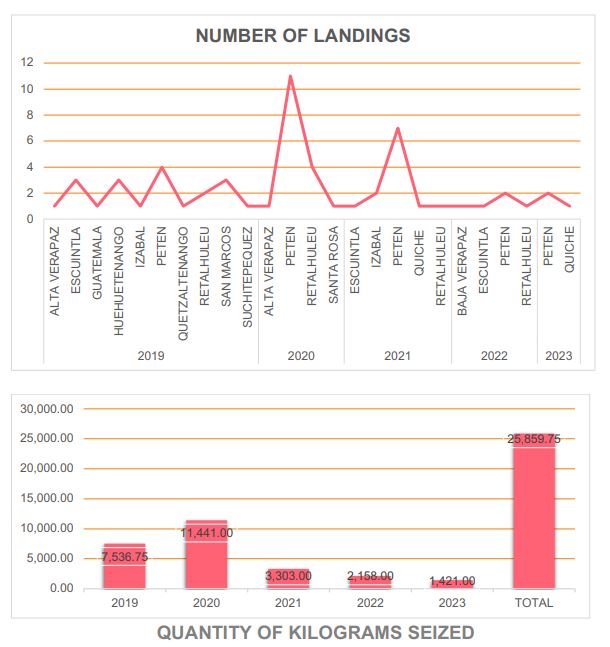
QUANTITY OF KILOGRAMS SEIZED
OPERATION BLACK WOLF
Following the strategic plan and combat against specific criminal phenomena, the Public Ministry of Guatemala through the Narcotics Crimes Prosecutor’s Office, the Ministry of the Interior through the Sub- directorate of Anti-Narcotics Analysis and Information, and the Ministry of National Defense through the Guatemalan Army and its specialized units, in coordination with the Office of National Security Investigations of the United States, plans, coordinates, and executes Operation BLACK WOLF, with the mission of dismantling criminal structures dedicated to air trafficking, coordination, reception, and transportation of This operation, in alliance with the United States Department of Justice, constitutes a large-scale operational, investigative, and judicial effort to curb drug trafficking activities. The operation began by gaining control of the criminal incidence area by law enforcement agents, an area previously controlled by the criminal structure. Likewise, the First Instance Court for Narcotics and Crimes against the Environment with Jurisdiction to Process High-Risk Cases,
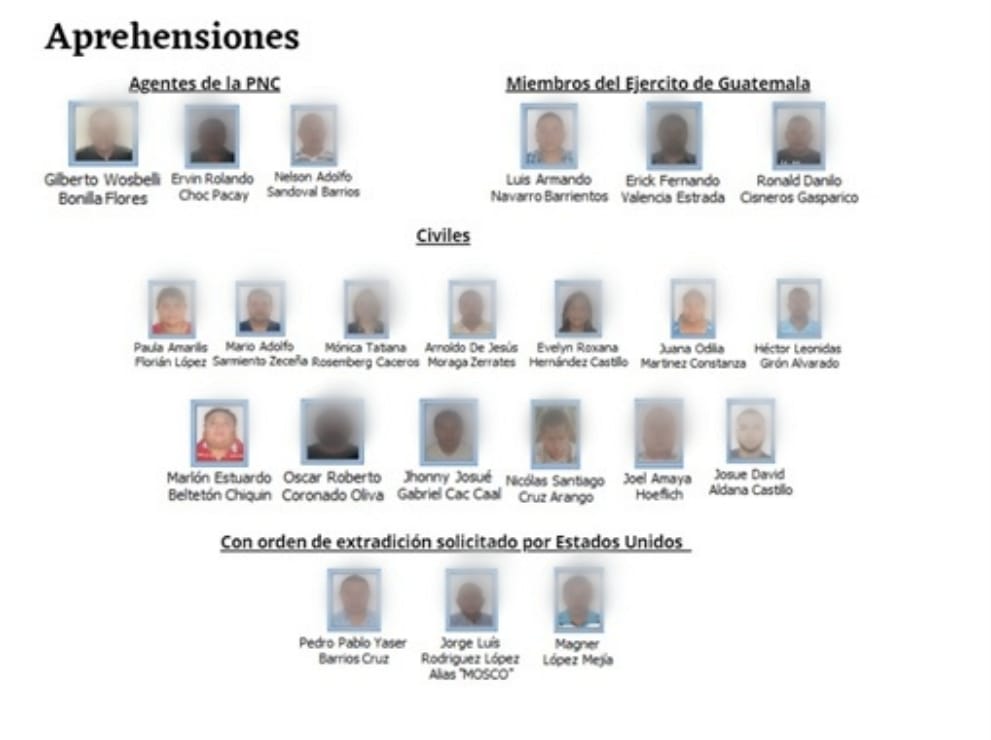
Group A, authorized and ordered (45) search and seizure operations, inspections, and searches in the departments of Alta Verapaz, Guatemala, Jutiapa, and mainly Retalhuleu. The judicial proceedings aim to gather evidence proving the existence and modus operandi of different criminal groups dedicated to airborne drug trafficking and the arrest of individuals involved in criminal activities related to the investigation. Among the members and collaborators of the criminal structure, three main cells can be identified, acting as a multifunctional-criminal trident, with a precise division of criminal functions, whose main objective is to guarantee impunity and avoid being identified by law enforcement agents from both Guatemala and the United States. Within the members and collaborators of the criminal structure, there are soldiers from the Guatemalan army, National Civil Police agents, doctors, community leaders, and COCODE president, leaders dedicated to drug trafficking, relatives, and collaborators related to the coordination, reception, guarding, and security of drug shipments (cocaine). These members and collaborators with criminal structures are investigated for various crimes, including illicit commerce, trafficking and storage, money laundering, illicit association, murder, conspiracy to murder, obstruction of justice, abuse of authority, use of forged documents, among others. In the operational planning, multiple meetings were held in the Eastern District of Texas, United States, with representatives of the Department of Homeland Security and the Department of Justice of the United States, as well as multiple meetings with representatives of the United States Embassy in Guatemala, representatives of the Public Ministry through the Narcotics Crimes Prosecutor’s Office, representatives of the Ministry of the Interior and the Sub-directorate of Anti- Narcotics Analysis and Information, representatives of the Ministry of National Defense and the Guatemalan Army, with the aim of coordinating the details of the operation at the national level and subsequent judicial-criminal processing in both Guatemala and the United States. Also, in the operation, 12 minibuses, 45 patrols, 4 helicopters, a Caravan-type plane, and 459 National Civil Police elements were used, along with 45 duly coordinated prosecutors.
MODE OF OPERATION: Regarding the criminal structures operating in Guatemala, the investigation revealed three main groups: The criminal cell responsible for air route coordination: This group’s main function is coordinating with international drug cartels overseeing the transportation of regional drugs to the United States. This criminal cell seeks cooperation with the drug reception cell and the influence trafficking cell to ensure criminal The criminal cell responsible for influence trafficking: This group’s primary function is lobbying or connecting with key actors in state law enforcement groups responsible for interdiction, investigation, and judicial proceedings related to drug trafficking and related crimes. This cell ensures the impunity of investigative and interdiction efforts and guarantees criminal success. The criminal cell responsible for drug reception: Unlike the previous cells, this criminal cell has territorial limitations. Its main function is the territorial control of a specific strategic area for drug trafficking, such as the northern Pacific coast area of the Retalhuleu department. It is also responsible for conditioning the clandestine airstrip (in coordination with the coordination cell), unloading the plane, extracting the pilot and copilot, safeguarding the drugs in key locations, and subsequently transferring and relinquishing responsibility once the cocaine shipment is handed over to Mexican criminal cells to continue its route to the United States.