







Publicado el 02 Diciembre 2025
Public Ministry Submits Progress Report on the Comprehensive Juvenile Criminal Justice Model in the Second Annual Report for 2024–2025
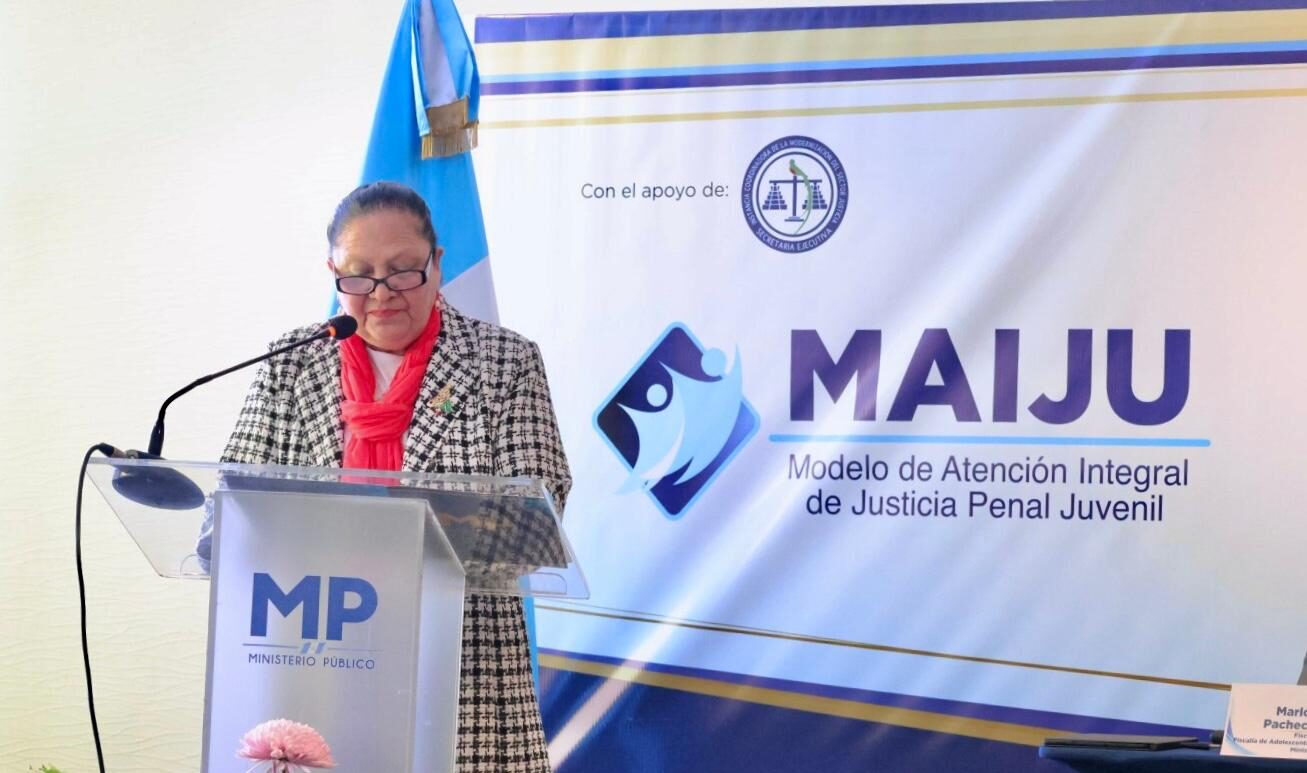
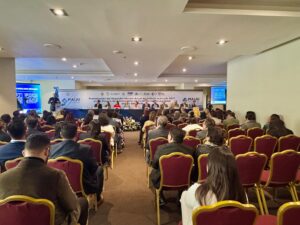
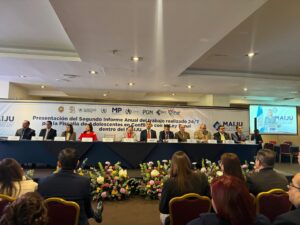
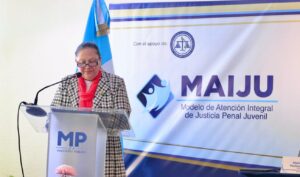
The Public Ministry of Guatemala, through its Prosecutor’s Office for Juveniles in Conflict with the Penal Law, has formally presented the Second Annual Report for 2024–2025 detailing advancements in the Comprehensive Juvenile Criminal Justice Model (MAIJU). This inter-institutional operational framework functions continuously—24 hours a day, 365 days a year—to ensure specialized, individualized, and rights-based care for minors involved in criminal proceedings, while upholding due process guarantees and addressing the rehabilitative needs of adolescents in conflict with the law.
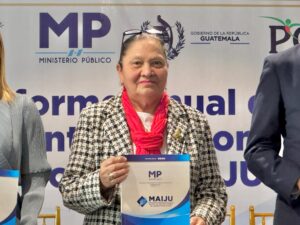
The report was presented under the leadership of Ms. María Consuelo Porras Argueta, Attorney General of the Republic and Chief of the Public Ministry, with the participation of Mr. Jorge González Barrios, President of the Child and Adolescent Appeals Court, Ms. Mayra Alejandra Carrillo de León, Executive Secretary of the Coordinating Body for the Modernization of the Justice Sector, Ms. Julia María Juárez Sagüil, Deputy Secretary-General of the Public Ministry, Mr. Marlon Pacheco Rodríguez, Section Prosecutor of the Prosecutor’s Office for Juveniles in Conflict with the Penal Law, and representatives from various institutions that comprise the MAIJU.
Over the course of the reporting period, the MAIJU processed 230 formal criminal complaints and 251 flagrancy offenses. Among the most commonly reported crimes in the complaints were sexual assault (rape), minor injuries, gender-based violence, and threats. In flagrancy offenses, illegal possession of firearms, reckless injuries, and extortion emerged as the predominant criminal acts. These statistics underscore the necessity for an expedited, coordinated, and legally grounded response to juvenile delinquency and reinforce the effectiveness of the MAIJU as a specialized prosecutorial mechanism designed to address the complex nature of adolescent criminal behavior.
A notable development highlighted in the report was the consolidation of the restorative justice model within juvenile criminal proceedings. The Prosecutor’s Office reported that 77 adolescents successfully completed their rehabilitative sentences, benefiting from multidisciplinary interventions that included legal guidance, psychological counseling, educational support, and social reintegration facilitated by the Execution Unit. This marks the Prosecutor’s Office for Juveniles in Conflict with the Penal Law as the sole prosecutorial office in the country to carry out such comprehensive rehabilitation efforts aimed at restorative outcomes—including the restoration of family ties and community reintegration.
In addition to these achievements, the report underscored the success of the national awareness campaign #NoEsErrorEsDelito («It’s Not a Mistake, It’s a Crime»), which ran from September 2024 to October 2025. This initiative reached 23,616 adolescents across educational institutions nationwide, focusing on educating minors on criminal liability, the legal ramifications of illicit conduct, and the ethical use of technology. By imparting knowledge of the legal classification of offenses and the criminal justice processes applicable to juveniles, the campaign sought to prevent future criminal activity and encourage a sense of legal responsibility in young people.
The report further emphasizes the importance of inter-institutional cooperation with various key stakeholders in the criminal justice system, such as the Judicial Branch, the Public Defense Institute, the National Institute of Forensic Sciences, the Ministry of Public Health, the Ministry of Education, the Ministry of the Interior, the Ministry of Social Development, the Social Welfare Secretariat of the Presidency, the Solicitor General’s Office, the Executive Secretariat of the Commission Against Addictions and Illicit Drug Trafficking, and the Municipality of Guatemala. This inter-agency collaboration ensures the holistic management of juvenile criminal cases, facilitating the continuum of care needed to support the rehabilitation and reintegration of minors, while maintaining public order and upholding constitutional principles.
Finally, the Prosecutor’s Office for Juveniles in Conflict with the Penal Law reaffirms its commitment to strengthening Guatemala’s juvenile justice system through restorative justice practices, with a continued emphasis on accountability, reparation, and social reintegration. This approach aligns with both national legal standards and international human rights norms, ensuring full compliance with the Convention on the Rights of the Child and the United Nations Rules for the Protection of Juveniles Deprived of their Liberty.
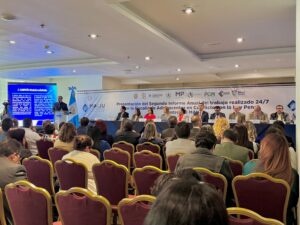
Guatemala, December 1, 2025